
There’s nothing quite like getting lost in a great book—especially when it sparks new ideas, challenges perspectives, and fuels creativity. Here, you’ll find a collection of thought-provoking reads that shape the way we think about innovation, leadership, and the creative process.
So, grab a book, find a quiet corner, and dive in. We promise—it’s worth the journey.
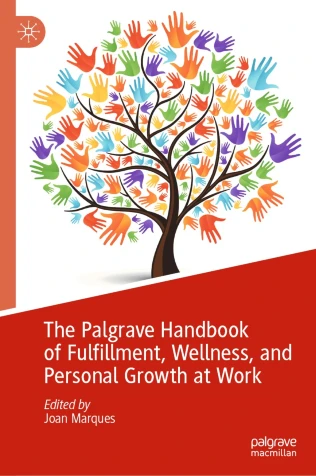
This handbook discusses the role of sustainability, well-being and growth in engagement and purpose at work. When employees are dissatisfied with their job, they tend to be disengaged and less productive. Given the correlation between job satisfaction and job performance, organizations are looking for ways to increase employee engagement and productivity.
ISBN: 978-3-031-35493
Chapter: ReVisioning the Way we Work: Organizational Creative Capacity and Expanded Cultures of Care (pages 483-396)
To address a complex environment and global talent shortage, it is crucial that organizations “revision” the way we lead, work, adapt to change, and collaborate creatively in ways that leverage and grow available talent, moving from innovation control to a more dynamic, design-driven innovation delivery. In this new world of work, characterized by new ways of organizing and working, new leadership styles, new benchmarks, and caring work cultures are also required.
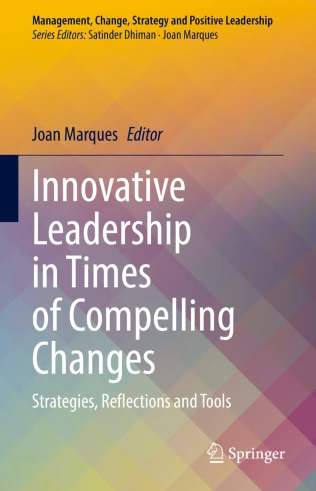
This book focuses on the need of leaders in professional and personal realms to understand the importance of innovative thinking to safeguard sustainability and enhance satisfaction and motivation among stakeholders in organizations. It provides professionals with a set of reflective stances, cautionary points, and roadmaps that enable them to do the right thing at the right time.
Chapter: Nurturing Creativity in a Culture of Care (pages 293-306)
We are in the throes of finding our “new normal.” Organizations depend upon capable leadership, to a noticeably increasing extent, to guide them through these unprecedented changes, especially in these times of economic turmoil. And yet, even some of the best companies are failing to adapt to change and implement their strategic plans successfully, especially in these times of economic turmoil. Current research indicates that most senior leaders believed that the next generation of managers is not ready to take over as leaders. Several studies highlight the gap in leadership capabilities among frontline managers and emerging leaders and in particular attribute this gap to lack of training programs or programs of poor quality. These statistics have significant implications for leadership develop programs. Certainly, responding to the complexity and inclusive diversity of the new knowledge paradigm of the twenty-first century is imperative to the sustainable economic viability in any country.
Chapter: Inclusive Leadership in a Creatively Compelling World
with Cheryl De Ciantis
(pages 135-153)
The changes we now see, unprecedented in our lifetimes, call for extraordinary response and commitment to action. We see five areas of unprecedented opportunity for leaders to redefine greatness for the coming generations. These are not new ideas per se; rather, they represent a will to use the capacities and perennial wisdom we collectively possess and commit to proceed with honesty and inclusion of all stakeholders—and these stakeholders include everyone on the planet. These five opportunities are embracing change as imperative while committing to creating nodes of needed stability, putting people first by prioritizing the value of empathy and getting real about issues of power regarding who gets what and why, commitment to values by “walking the talk,” making it real by ensuring all stakeholders have a place at the table, and re-mything ourselves: using every avenue available to us—from science to the arts—to re-create the narratives that valorize the truths we wish to live by as humans within an interconnected web of existence.
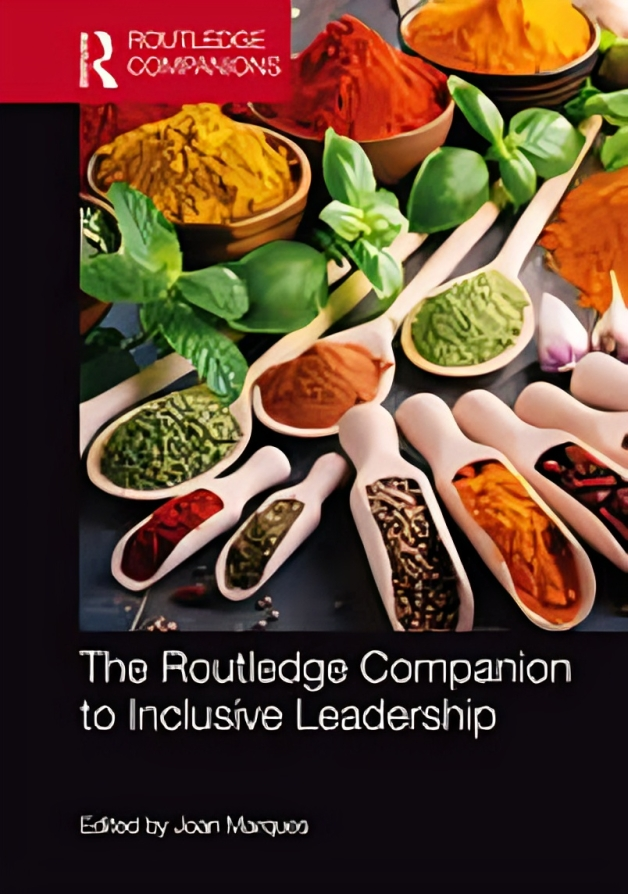
An important reference work on a practice that is needed more than ever in a VUCA world, this book helps readers understand the importance of responsible and constructive practices and behaviours in leadership.
The broad approach to inclusive leadership presented in this volume highlights correlations between inclusive leadership and myriad issues, qualities and circumstances that serve as foundations or impact factors on it. Concepts and challenges are reviewed such as change, innovation, the bottom line, sustainability, and performance excellence and reflection on critical practices and qualities such as trust, passion, ethics and empathy.
Chapter: What Pepper Can’t Do and Why We should Care
with Cheryl De Ciantis
(pages 13-25)
Imagine this: you are on your daily run, equipped with the minute insertable device you have chosen to wear under your skin that monitors your vital signs moment to moment. It detects that your system is low on potassium. In response, it transmits an order to a 3D printer that loads a small package with a sufficient quantity of gummy bears—cherry flavored, which is your favorite—and it is delivered to you via a drone. You can eat them to return your system to chemical balance. This likely does not sound to most like something that will happen too far into the future, but some of you will know that systems such as this are being developed and tested. Digital technologies have fundamentally changed the game. AI will change everything. The changes in economies, work and employment are already producing a radically different landscape, one that challenges every aspect of society at large and daily life for every one of us. In the face of massive change, what is the role of leadership, in real terms? We have to think differently, expand our mindsets and keep expanding them.
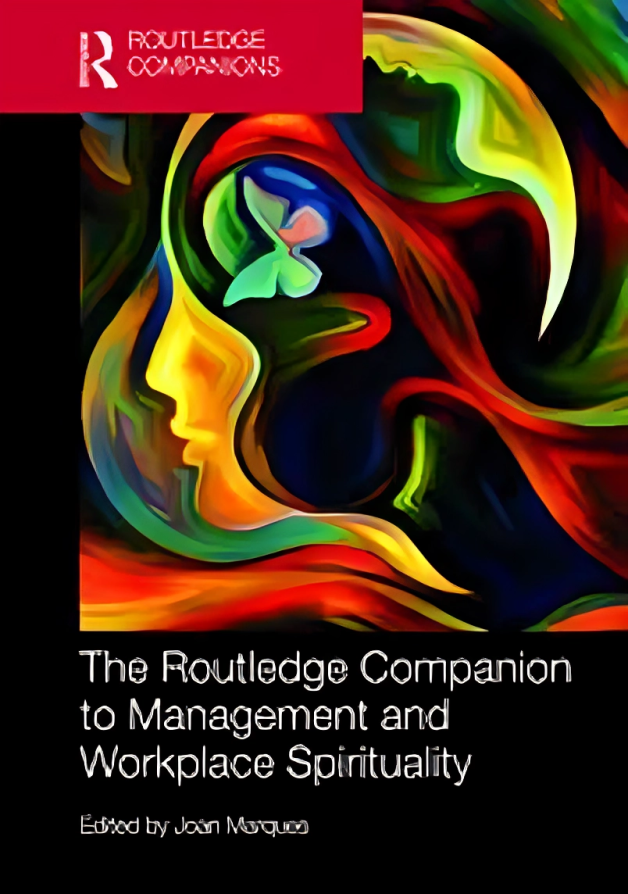
This book provides readers with a broad, cutting-edge overview of the discipline of management, spiritualty and religion (MSR in the Academy of Management literature and conferences).
Leading scholars from around the world share their insights and research on important topics such as cultural influences in the workplace, leadership and spirituality, and linking spirituality to ethics, sustainability, and corporate social responsibility.
ISBN: 9781251015110
Chapter: Awakening Leadership – The Outer Reaches of Inner Space
with Cheryl De Ciantis
(pages 124-139)
The demand for innovation within organizations is a worldwide concern. The pre-conditions necessary for liberating creativity within the organizational context have been well described, but the means for behaviorally engaging personal creativity “on the ground” within organizations are challenging to the managerial/administrative mindset and, paradoxically as this may seem, also to the visionary senior leadership perspective. Disengagement in the workplace is high. It is necessary to dig far deeper to find the sources of engagement in work and life, down to the wellsprings of emotion, empathy and imagination, and to the roots of both individual and collective sense of purpose. One key issue which may be masked under all the measurement is that empowerment is seen as a neutral concept, a quantifiable factor that is necessarily disconnected from personal values, much the way we conceive of scientific method, regardless that our methods not infrequently have harmful consequences. Empathetic engagement is de-valued and the illusion of logical neutrality is too often disconnected from the real, ethical questions of who benefits from what and how, and why it matters. In this chapter, we posit that we arrive at a spiritual aspect of leadership through two pathways: (1) self-knowledge of values and unleashing of personal creativity through individuation, and (2) participating in values-based phronetic dialogue that synergizes the creative instinct for the good of a community.
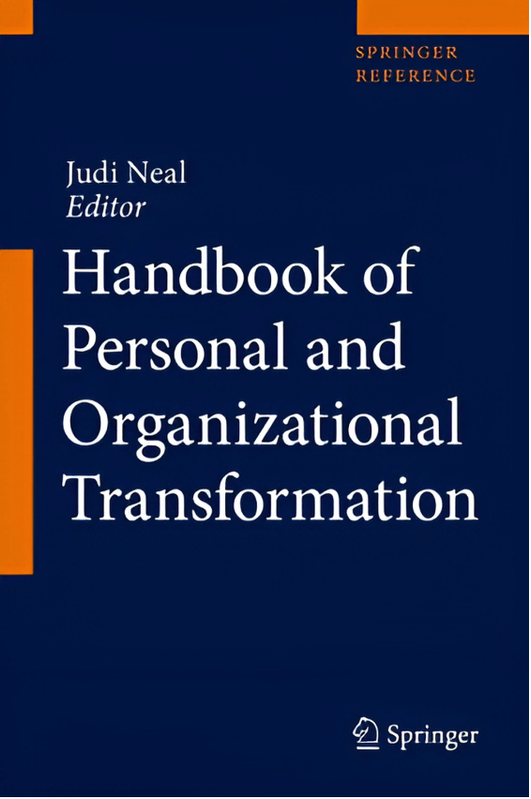
This handbook is based on the premise that there can be no organizational transformation without personal transformation. Anything else is just moving the chairs around on the deck of the Titanic, and we see that all too often in organizations today. Einstein said that we cannot solve problems from the same mindset that created the problems. In order to see positive change occur in the world, we must shift our consciousness to a high level of thinking and being, but we must also have systems or approaches that scale up, so that there is a collective shift in consciousness in groups, work teams, villages, governments, and corporations.
The Handbook of Personal and Organizational Transformation acknowledges the classic literature and principles that have informed the field to date, but primarily showcases authors who are on the cutting edge of new theories and new approaches to give us their latest thinking. Some of these ideas are conjecture about what is possible in human and organizational development. Some of these approaches are currently being tested in the field and may not yet have scientific results.
ISBN: 978-3-319-66892-5
Chapter: The Untapped Power of Imagination in the Workplace
Every life – and every organization – is mythic territory. I believe that breakthrough thinking cannot be taught; it can only be learned through experience. In order to create that learning experience we delve into myth, and archetypal psychology, the branch of psychology whose field of attention is image, images that spark the imagination and ignite the soul to find out what really works.
Every corporate story begins with an idea that becomes an expanded and shared vision. Before that vision is well shared, much less completely implemented, the organization must pass through a developmental process that is similar to all human development. Along the road to success, many organizations lose awareness of foundational stories that contain fundamental operating principles, flounder in direction, lose market share, and disempower their brain trust. A mission statement that remains on a wall has no substance. It informs the reader of what is claimed. For a mission statement to be meaningful, it must come from a working belief, a mythos.
In these pages I will use an archetype of transformation: the Hero’s Journey, initially described by mythologist Joseph Campbell (1968), as a working map, a tool for transformation in the corporate environment. Myths are not just told; they are felt as they resonate throughout the body as well as the heart and mind.
This is for the social architects, the collaborative chemists, and the inspirational dreamers who believe that they can indeed, change the world.
Creativity in Business – designing for longer lives.
© 2025 CIB Canada. All Rights Reserved | Powered by GoDaddy